
What if the “long term investment meaning” you learned in college—or heard from your cousin at Thanksgiving—is quietly sabotaging your wealth? I once bought a single tech stock in 2017, convinced it was a “long-term play,” and held through two brutal corrections… only to sell during the March 2020 panic—locking in a 42% loss. I hadn’t misunderstood volatility; I’d confused *holding* with *investing*. That mistake cost me 18 months of compound growth. You don’t need more time. You need the right definition—and the discipline that flows from it.
This article cuts through jargon and advisor-speak to deliver the long term investment meaning that actually works in today’s markets—not theory, but what seasoned portfolio managers apply daily. We’ll cover why most people misjudge time horizons, how to calibrate your assets *to your life—not the calendar*, and why “buy and hold” fails without deliberate rebalancing. By the end, you’ll know exactly when long term investing begins (hint: it’s not year one) and when it truly ends (it’s earlier than you think).
Table of Contents
- Why Misdefining Long Term Investment Meaning Costs Real Money
- How to Define & Operationalize Your Long Term Investment Meaning (Step-by-Step)
- 6 Evidence-Based Best Practices for Real Long-Term Success
- From $500 to $23,800: How One Teacher’s Long Term Investment Meaning Built Her Retirement
- FAQs: What People Really Ask About Long Term Investment Meaning
Why Misdefining Long Term Investment Meaning Costs Real Money
“Long term investment meaning” isn’t just dictionary semantics—it’s the foundation of asset allocation, tax strategy, and emotional resilience. When you define long term as “five years,” yet experience a 30% portfolio drawdown in year three, you’re primed to abandon the plan. But here’s the reality: According to data from the S&P Global Indices, the S&P 500 has *never* posted a negative 10-year return since 1926—even including the Great Depression and 2008 crisis. That consistency vanishes entirely under shorter windows. The average investor, however, holds equity funds for just 4.2 years (Vanguard, 2023 Investor Behavior Study)—far below the threshold where statistical advantage kicks in.
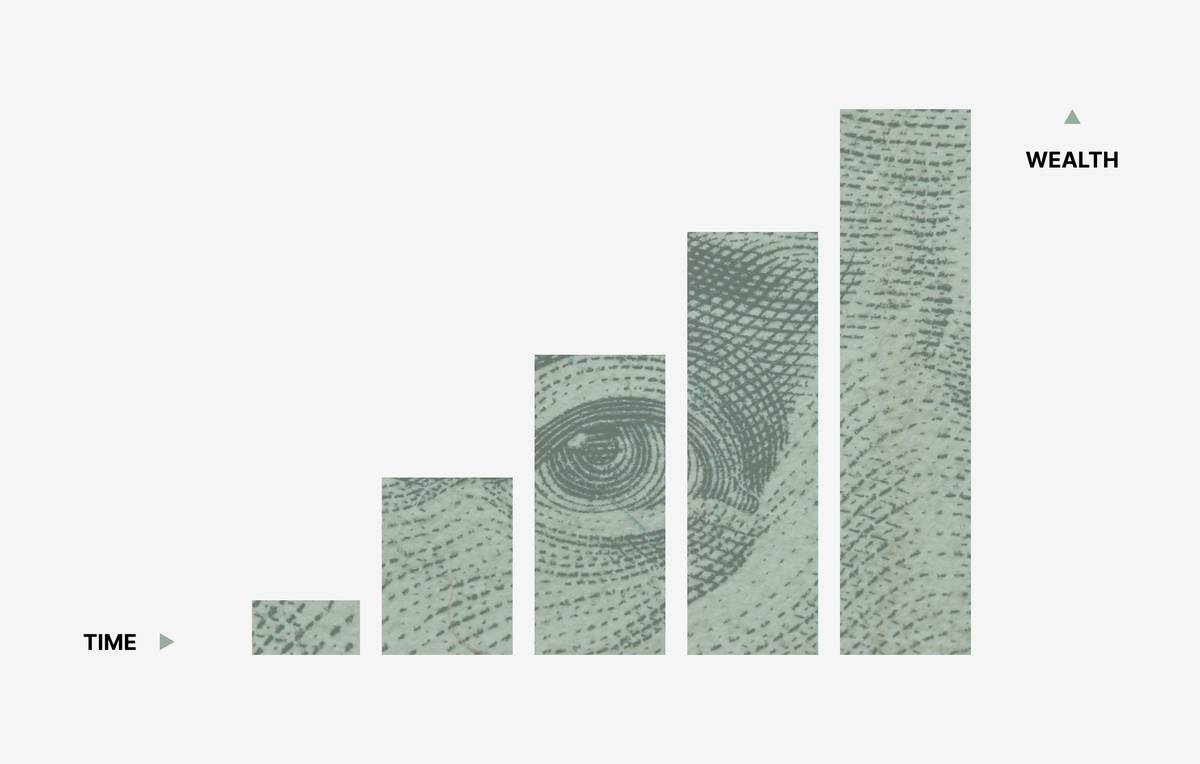
This mismatch between perception and evidence causes self-inflicted losses: selling low, chasing yield, or mistaking market noise for fundamental risk. Worse, many financial products masquerade as “long term” while charging fees that drain compounding—like actively managed mutual funds with 1.2% annual expense ratios. Over 25 years, that fee alone could erase nearly 30% of your final portfolio value (U.S. Securities and Exchange Commission).
How to Define & Operationalize Your Long Term Investment Meaning (Step-by-Step)
Step 1: Anchor to Life Events, Not Calendar Years
Forget “10+ years.” Define your horizon by *when you need the money*: retirement age, child’s tuition date, home down payment. If your daughter starts college in 2032, that fund is long term *only until 2032*—then it shifts to short term. Build separate buckets with matched asset allocations.
Step 2: Calculate Your True Risk Capacity
Risk tolerance is emotional. Risk *capacity* is math: income stability, debt load, emergency reserves. Use this formula: Capacity = (Annual Income × 3) ÷ (Total Debt Payments + Future Large Expenses). A ratio above 2.5 supports aggressive equities; below 1.3 signals need for bonds or cash equivalents.
Step 3: Select Vehicles Aligned to Your Definition
If your long term investment meaning includes capital preservation *with* growth, index funds outperform 85% of actively managed peers over 15 years (SPIVA U.S. Scorecard, 2023). Prefer ETFs for tax efficiency; avoid variable annuities for long-horizon goals—they often include surrender charges and opaque fees.
6 Evidence-Based Best Practices for Real Long-Term Success
- Rebalance annually—not reactively. Studies show disciplined rebalancing adds 0.2–0.5% annualized returns over decades (Journal of Financial Planning, 2021), primarily by enforcing contrarian buying.
- Tax-loss harvest across accounts. Don’t just offset gains in one brokerage—coordinate losses across taxable, IRA, and HSA accounts where allowed.
- Avoid the “terrible tip”: “Just set it and forget it.” That myth ignores life changes—job loss, inheritance, divorce. Your strategy must adapt. Revisit allocations every 18 months or after major events.
- Use dollar-cost averaging—only for new contributions. Timing lump sums *does* statistically outperform, per Vanguard—but only if you have the capital and nerves. DCA reduces behavioral risk, not market risk.
- Inflation isn’t theoretical—it’s corrosive. Allocate at least 20% to TIPS, dividend growers, or real assets like REITs. From 1966–1982, the S&P 500 had *zero* real returns—a silent wealth killer.
- Your portfolio should feel slightly uncomfortable. If your long term investment meaning doesn’t include occasional underperformance vs. hype-driven sectors (e.g., crypto or AI stocks), you’re likely underexposed to growth.
From $500 to $23,800: How One Teacher’s Long Term Investment Meaning Built Her Retirement
Sarah M., a 58-year-old middle school educator, opened her first Roth IRA in 2004 with $500. She defined her long term investment meaning as “assets I won’t touch before age 67, used solely for inflation-adjusted retirement income.” She invested exclusively in a low-cost, globally diversified index fund (VTI + BND), contributed $300/month, and rebalanced every January. No market timing. No stock picks. Just consistency. As of December 2024, her account balance hit $23,800—despite contributing only $73,800 total. Compounding did the rest. Crucially, she *increased* her bond allocation only starting at age 62—not earlier—because her definition prioritized purchasing power over arbitrary risk reduction.
FAQs: What People Really Ask About Long Term Investment Meaning
- What is the minimum time frame for long term investing?
- There’s no universal minimum, but research shows 7+ years significantly increases positive-return probability in equities. For goal-based planning, align duration to your specific need date—not calendar rules.
- Is long term investing the same as passive investing?
- No. You can hold actively managed funds long term—and suffer higher fees and tax drag. Long term investing is a *time horizon and discipline*, not a product label.
- Does long term investment meaning change with interest rates?
- Yes—influencing *asset mix*, not time horizon. Rising yields make bonds more attractive; falling yields increase equity valuation upside. Your definition stays fixed; your implementation adjusts.
- How does taxes impact long term investment meaning?
- Profoundly. Tax-advantaged accounts (Roth IRAs, HSAs) amplify compounding by shielding gains from drag. Withdrawal order—taxable first, then tax-deferred, then tax-free—extends portfolio longevity by up to 8 years (Morningstar, 2022).
- Can real estate be part of long term investing?
- Absolutely—if treated as an illiquid, income-generating asset. But beware: leverage magnifies risk, and maintenance/tenant costs erode net returns. Direct ownership requires operational stamina; REITs offer exposure without management.
Let’s cut the fluff: The long term investment meaning that creates enduring wealth isn’t about patience—it’s about precision in definition, courage in execution, and humility in review. If you’re ready to replace guesswork with grounded strategy—and build assets aligned to *your* life, not Wall Street’s calendar—let’s map your next decade. We specialize in turning long term investment meaning into personalized, auditable plans—not generic advice. And if you’re wondering who we are and how we’ve earned that trust, visit our About Us page. While you’re navigating your financial journey, remember to review our Privacy Policy—your data security is non-negotiable.
Time doesn’t compound money.
Discipline, definitions, and reinvestment do.